
Crisis Averted? How DC's 5G Collapse Forged Future State & Redefined its Universe for "All-In"
- Erik Dansereau
- May 26, 2025
- 16 min read

Updated: Oct 14, 2025
Alright, DC devotees and continuity connoisseurs, buckle up! We're diving headfirst into one of the most ambitious, controversial, and ultimately transformative periods in recent DC Comics history: the saga of the "5G" initiative and its eventual rebirth as the "Future State" event. If you’ve ever wondered what happens when a comic giant plans a universe-shattering shake-up, only for those plans to implode and reshape into something entirely new, then this is the story for you. This isn't just about a relaunch; it's about a vision, a rebellion, and the enduring power of legacy in a universe that’s always in motion. We'll dissect the grand plans, the creator clashes, the rise of new heroes, and how the echoes of this bold venture still ripple through the DC Universe, right into the current "All-In" era!

The Colossal Blueprint: What Was DC'S 5g Supposed to Be?
The whispers started, then grew into a roar: DC was planning something massive, codenamed "5G" or "Generation Five." This wasn't just another # 1 issue refresh; this was a root-and-branch restructuring, a bold attempt to make over 80 years of DC history truly matter. The core idea was to consolidate this sprawling, often contradictory, past into a single, aging timeline where characters would evolve in real time. Imagine heroes from World War II, the "Generation One" like the Justice Society and the original Wonder Woman, actually aging, passing the torch through the Silver Age icons (Generation Two), the era of the Teen Titans (Generation Three), and into the then-modern day (Generation Four).
By the time 5G was slated to launch in 2021, foundational heroes like Bruce Wayne and Clark Kent would be significantly older, paving the way for the "Fifth Generation." This new wave would see fresh faces and legacy successors stepping into the iconic boots of Batman, Superman, Wonder Woman, and more. Luke Fox, or perhaps his brother Jace, was tipped to be the new Batman ; Jonathan Kent would fully embrace the Superman mantle ; and Yara Flor, a new Amazonian hero, was set to be Wonder Woman. The guiding philosophy was "Everything Matters," a monumental effort to canonize and integrate every major past storyline.
The architect behind this audacious plan was then-DC Publisher Dan DiDio. Known for overseeing transformative (and sometimes divisive) changes like the "New 52" reboot , DiDio envisioned a DC Universe where characters genuinely evolved. So committed was he, there was even a rumored "Big Red Reset Button" planned for 2025 – an escape hatch, tied to the deaths of the original Batman and Superman, if 5G didn't fly with Warner Bros. or the audience. This "everything matters" mantra, while ambitious, was a double-edged sword. Forcing a rigid canon could stifle creativity , and the sheer weight of 80 years of history, even streamlined, might have been more daunting than welcoming for new readers, a risky move in a competitive market.
Tremors in the Foundation: Controversy and Collapse
Like any grand design with such high stakes, 5G wasn't without its internal critics, and the cracks began to show long before any official launch. The ambitious scope and some of the specific creative directions ignited significant controversy and pushback from within DC's own ranks.
Many prominent creators, the very people who bring these worlds to life, voiced serious concerns. Scott Snyder, a leading voice for Batman at the time, reportedly had no desire for his major event, Dark Nights: Death Metal, to serve as the narrative springboard into 5G. Accounts even suggest that Snyder, alongside other influential writers, attempted an "intervention" to persuade DiDio to reconsider the 5G path. A major sticking point was the mandate for writers to "adhere closely to this rigid canon," a constraint that many felt would suffocate the creative freedom essential to the medium.
Adding fuel to the fire were some truly controversial character pitches. Grant Morrison, a name synonymous with innovative and beloved DC storytelling, was initially intrigued by 5G's scale but became "horrified" by DiDio's pitch to transform Superman and Supergirl into "rightwing authoritarians" leading a new version of The Authority. Morrison argued passionately that such a portrayal would "undermine the fundamental appeal" of these characters, whose purpose was to uplift and inspire, not to mirror humanity's worst traits.
This philosophical clash over the very soul of DC's flagship heroes was a critical point of friction. Rumors also swirled about Damian Wayne, Batman's son, potentially turning into a villain. These darker, more cynical interpretations of cherished heroes deeply troubled creators who valued their inherent optimism.
Dan DiDio's own reputation likely didn't help matters. Some fans and creators perceived him as having a dislike for certain "legacy" characters like Dick Grayson (Nightwing) and Wally West (The Flash), often blaming him for their sidelining in past storylines. This history fed speculation that 5G might be a more sweeping attempt to permanently sideline characters he wasn't fond of, or, more cynically, an initiative designed to fail, thereby justifying a return to a more "classic" status quo.
The situation reached a tipping point with DiDio's abrupt departure from DC in February 2020.

Given 5G was so intrinsically linked to his personal vision, his exit created a power vacuum and critically undermined the project's momentum. Reasons for his departure were rumored to be multifaceted, from fostering a poor working environment and the chaotic 5G planning process to potential disfavor from Warner/AT&T executives, possibly exacerbated by controversies like the "Bat Penis Crisis" surrounding Batman: Damned.
Then came the COVID-19 pandemic in early 2020, an unprecedented global event that threw the entire comic book industry into disarray. Diamond Comic Distributors temporarily halted shipments, disrupting publishing schedules and sales. This crisis forced DC to reassess everything. The Generation Zero Free Comic Book Day issue, intended as a prelude to 5G, was delayed and ultimately sidelined. This enforced pause, however, inadvertently provided DC with an unexpected window to pivot away from the increasingly troubled 5G initiative.
In the aftermath, DC's new leadership, including Publisher and Chief Creative Officer Jim Lee, officially confirmed that 5G, as originally conceived, was no longer happening. Lee articulated a new editorial vision: DC would focus on "organically build[ing] up individual characters" and integrating compelling story ideas into the ongoing mythology, rather than "dumping it all in one month and renumbering the line" for a short-term sales spike. Later, Geoff Johns' Flashpoint Beyond series even included a meta-textual nod with the phrase "5G AVERTED" on Rip Hunter's chalkboard – a subtle acknowledgment from DC itself that the controversial initiative had been shelved. The 5G revolution was officially over before it truly began.
From the Ashes: "Future State" Rises!

With 5G off the table, DC faced a challenge: what to do with all the creative work, character designs, and narrative ideas already developed for the ambitious initiative? In a pragmatic and creatively resourceful move, much of this material was salvaged and repurposed for a two-month publishing event called "Future State," which ran in January and February 2021.
"Future State" wasn't the definitive, permanent generational shift 5G had envisioned. Instead, it was explicitly framed as showcasing "possible futures" of the DC Universe, offering tantalizing glimpses into various potential timelines. These stories were set at different points, from the near future of 2030 to the very end of time, rather than establishing a single, new, canonical status quo. This approach was crucial for managing expectations and avoiding the kind of binding commitment that had made 5G so contentious. It allowed DC to test the waters for new characters and concepts without the immense pressure of a full-scale reboot.
Narratively, "Future State" was positioned as an outgrowth of Dark Nights: Death Metal. The premise was that the Justice League's victory, while saving the Multiverse, had shaken the fabric of time and space, allowing these glimpses into potential futures. Following its two-month run, "Future State" led directly into the "Infinite Frontier" relaunch in March 2021. This new era established a paradigm where "every story can exist in some shape or form," and many of the characters and concepts spotlighted in "Future State" were subsequently integrated into the ongoing DC Universe.
DC Executive Editor Marie Javins characterized the event positively, stating, "The DC Universe has always been fertile ground for new and refreshing takes on our characters, and DC Future State definitely contributes to this legacy." This framed "Future State" not as a failed reboot, but as another chapter in DC's long tradition of exploring alternate realities and future timelines.

A Glimpse of Tomorrow: Navigating the Worlds of Future State
"Future State" threw open the doors to a sprawling, multifaceted vision of potential destinies for the DC Universe. The event was broadly structured around the Batman, Superman (which also included Wonder Woman and related characters), and Justice League "families" of titles, offering a mix of oversized anthologies, miniseries, and one-shots. This format allowed for a wide range of stories, spotlighting new characters in iconic roles and placing established heroes in unfamiliar, often challenging, circumstances.

The Bat-Tangle of Tomorrow: Gotham City under "Future State" was a grim, Magistrate-controlled dystopia where masked vigilantes were outlawed. Here, Jace Fox, son of Lucius Fox, emerged as The Next Batman, a direct realization of a core 5G succession plan. But Bruce Wayne wasn't entirely gone; he operated in the shadows as the more stripped-down, hunted Dark Detective. Other Bat-family members like Nightwing, Robin (Tim Drake), Catwoman, and Harley Quinn navigated their own struggles against the Magistrate.

Krypton's Heirs & Amazonian Might: With Clark Kent largely absent from Earth, his son, Jonathan Kent, fully stepped into the role of Superman of Metropolis. His tenure saw him controversially "bottle" the city in an attempt to protect it, creating friction with heroes like Supergirl. Meanwhile, the original Superman, Clark Kent, was depicted as a gladiator on Mongul's Warworld, fighting for liberation – a far cry from some of the darker, authoritarian 5G pitches for the character. A major breakout star was Yara Flor, a vibrant Brazilian Amazon who became the new Wonder Woman, protector of a different Amazon tribe and a bridge between mortal and mythical realms. We also saw Kara Zor-El as Superwoman and the often-underutilized Nubia gaining prominence as the Immortal Wonder Woman.
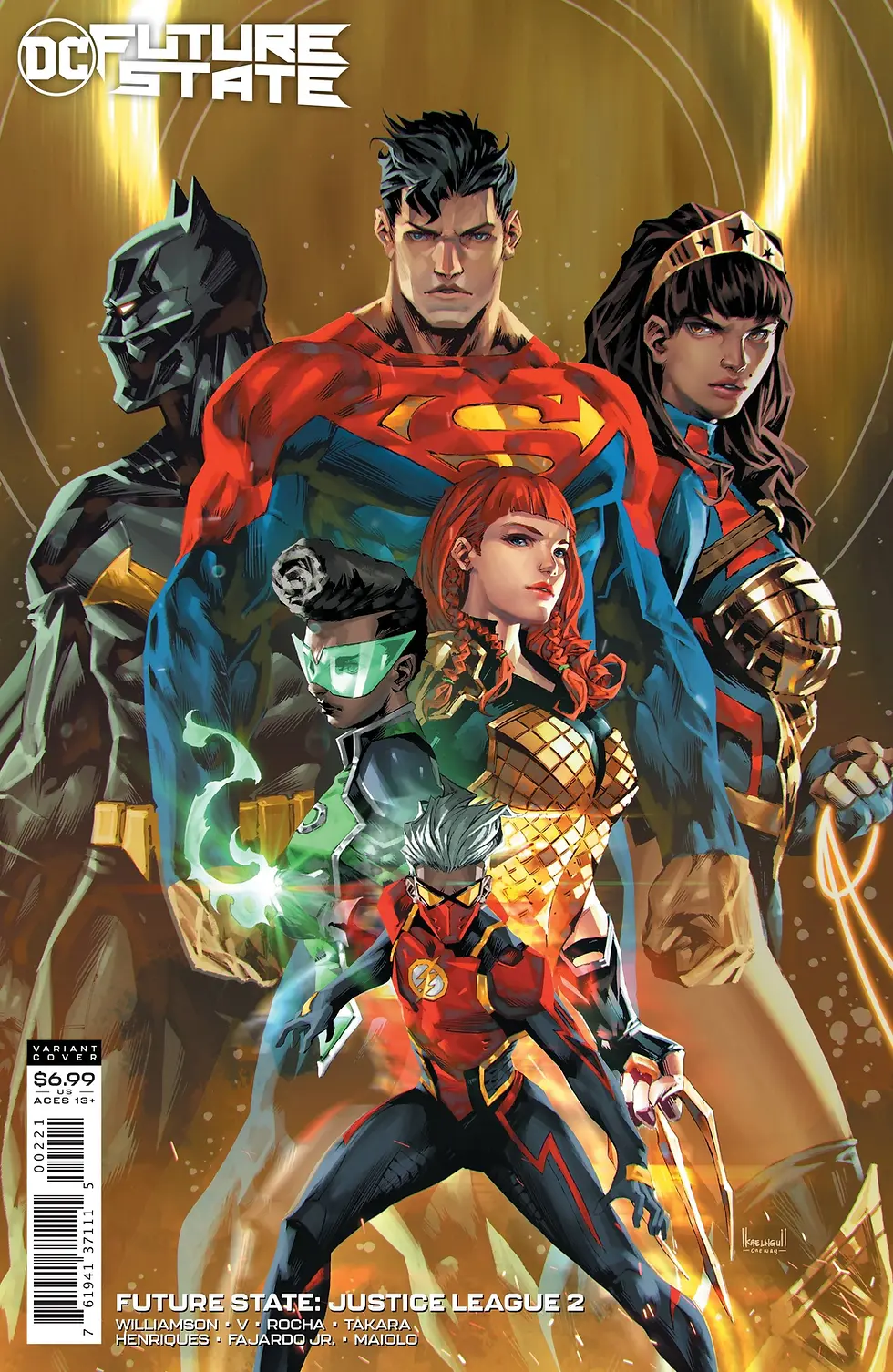
A League of New Legends: A new Justice League formed, featuring Jon Kent as Superman, Yara Flor as Wonder Woman, Jace Fox as Batman (though his membership was fluid), Jo Mullein as the primary Green Lantern, a new non-binary Flash from Earth-11 named Jess Chambers (Kid Quick), and Andy Curry (Aquawoman, daughter of Arthur and Mera). A unique twist? Their secret identities were kept even from each other. The Green Lantern Corps was largely defunct , and the Teen Titans faced a particularly grim future, dealing with the apocalyptic aftermath of a tragedy at Titans Academy. Future State: Swamp Thing offered a poignant vision of a far-future Earth dominated by a benevolent Swamp Thing.
The prevalence of dystopian themes across "Future State" provided an immediate crucible for these new legacy heroes, quickly establishing their capabilities. The decision to feature multiple Batmen and Supermen concurrently, rather than a clean replacement as 5G envisioned, might reflect a strategic "hedging of bets" by DC, allowing them to spotlight the new generation while still catering to fans of the classics.
The event brought together a wide array of creative talent, from established DC names like Mariko Tamaki and Joshua Williamson to newer voices like John Ridley and L.L. McKinney, injecting fresh perspectives into the DCU.
Here’s a look at some of the key titles that defined this glimpse into tomorrow:
Key Future State Titles & Their Dark Premonitions
Future State Title/Family | Key Characters Featured | Core Premise/Theme | Notable Creative Team Member(s) |
Future State: The Next Batman | Jace Fox (Batman), The Magistrate, Outsiders, Arkham Knights, Batgirls, Gotham City Sirens | Gotham City as a high-tech police state; new Batman rises; various vigilante groups resist. | John Ridley, Vita Ayala, Paul Jenkins, Paula Sevenbergen |
Future State: Dark Detective | Bruce Wayne (Dark Detective), Red Hood, Grifters | Presumed-dead Bruce Wayne operates in shadows against the Magistrate. | Mariko Tamaki, Joshua Williamson, Matthew Rosenberg |
Superman Family | Jon Kent (Superman), Clark Kent, Supergirl, Yara Flor (Wonder Woman), House of El, Legion | Legacy of the House of El; Jon Kent as Earth's Superman; Clark Kent exiled to Warworld; Yara Flor's debut. | Phillip Kennedy Johnson, Sean Lewis, Joëlle Jones, Brian Michael Bendis |
Future State: Wonder Woman | Yara Flor | Introduction of Yara Flor as the new Wonder Woman, protector of the Amazon. | Joëlle Jones |
Future State: Immortal Wonder Woman | Diana Prince, Nubia | Diana Prince at the end of time; Nubia's growing role and importance. | Becky Cloonan, Michael W. Conrad, L.L. McKinney |
Future State: Justice League | Jon Kent (Superman), Yara Flor (Wonder Woman), Jace Fox (Batman), Jo Mullein (GL), Jess Chambers (Flash), Andy Curry (Aquawoman) | A new Justice League with secret identities, even from each other, faces an evolved old foe. | Joshua Williamson, Ram V (JLD backup) |
Future State: Green Lantern | John Stewart, Jo Mullein, Jessica Cruz, Guy Gardner, Kyle Rayner | The Central Power Battery is dark; Green Lanterns are scattered and powerless, led by John Stewart. | Geoffrey Thorne, Josie Campbell, Ryan Cady, Ernie Altbacker |
Future State: Teen Titans | Nightwing, Raven, Beast Boy, Cyborg, Starfire, Red X, Shazam | Aftermath of a tragedy at Titans Academy; surviving Titans deal with a dark, magic-based threat (The Unkindness). | Tim Sheridan |
Future State: Swamp Thing | Swamp Thing | In the distant future, Swamp Thing presides over a post-human Earth, now a lush, green world. | Ram V |
The Fan & Critic Verdict: A Mixed Bag of Futures
The journey from the rumored 5G to the published "Future State" was, unsurprisingly, met with a wide spectrum of reactions. As whispers about 5G initially circulated, the fan community buzzed with a mix of curiosity, skepticism, and outright concern. The idea of another major DC reboot so soon after "New 52" and "Rebirth" sparked discussions about "relaunch fatigue." Many worried about continuity, the fate of beloved legacy characters, and potential editorial overreach. Dan DiDio's history fueled fears that 5G might be an attempt to sideline certain heroes permanently, or even an initiative designed to fail to justify a return to a more traditional status quo.
When "Future State" actually arrived, the reception was decidedly mixed. Comic Book Roundup, an aggregator of reviews, shows an average score of 7.8 out of 10, indicating a generally positive but not overwhelmingly enthusiastic response. Some observers dismissed it as a "filler event," akin to past stopgaps like "Convergence."
However, several titles and elements within "Future State" garnered significant praise. Future State: Aquaman, featuring Jackson Hyde and Andy Curry, was lauded for its strong characterization and optimistic tone. Ram V's Future State: Swamp Thing was frequently cited as a standout, praised for its poignant narrative and beautiful artwork. Joëlle Jones's introduction of Yara Flor in Future State: Wonder Woman was celebrated for its vibrant art and fresh heroine. Future State: Superman: Worlds of War resonated for its inspirational depiction of Clark Kent , and Mariko Tamaki's Future State: Dark Detective offered a compelling cyberpunk take on Bruce Wayne. The new Future State: Justice League and Future State: Immortal Wonder Woman also found favor. Across the line, the artwork was frequently commended, and the introduction of diverse new characters like Yara Flor was generally seen as a positive step.
Conversely, several aspects drew criticism. The pervasive grim and dystopian tone across many titles was a common complaint, with some finding the futures depicted overly dark and "nihilistically depressing." Issues with narrative cohesion and clarity were raised, with some stories feeling confusing or character motivations muddled. The ongoing Future State: Gotham series, which spun out of the event, particularly suffered from critiques of chaotic plotting. Some storylines felt derivative, and certain characterizations, like those of Jon Kent and Kara Zor-El in their "Future State" roles, or Jace Fox's initial impact as The Next Batman, didn't land well with all readers. The "Unkindness" storyline, threading through multiple titles, was heavily criticized for being convoluted.
This mixed reception likely stemmed from "Future State" serving as a launchpad for numerous new creative teams, some new to DC or comics itself. As an experiment in talent development, it naturally yielded variable outcomes, contributing to the uneven quality across the event.
The Lingering Echo: "Future State's" Legacy into "Infinite Frontier" and "All-In"
Despite the cancellation of 5G as a full reboot and the temporary nature of "Future State," the initiative left a discernible mark on the DC Universe. The "Infinite Frontier" era, launched in March 2021, immediately began to weave many of "Future State's" prominent characters and narrative threads into the main DC continuity.
Several characters introduced or spotlighted in "Future State" found enduring roles. Yara Flor quickly became Wonder Girl in the main DCU, receiving her own series and becoming a significant new presence. Jace Fox transitioned into the main continuity as well, starring in I Am Batman and relocating to New York City, though his series eventually concluded. Jonathan Kent's role as Superman of Earth while his father was off-world became a major storyline, with Superman: Son of Kal-El garnering significant media attention for its exploration of Jon's bisexuality and contemporary social issues. Jo Mullein's prominence as a Green Lantern was solidified , Jess Chambers (Kid Quick) appeared in multiverse-related titles , and Nubia saw her profile significantly raised, becoming Queen of the Amazons and headlining her own series.
The most successful integrations often involved characters operating alongside established heroes rather than as outright replacements – a key lesson learned from the 5G controversy. Concepts like the Magistrate regime became a central plot point in Batman titles, culminating in the "Fear State" event , and the grim future of the Titans Academy directly informed the series of the same name.
The entire 5G/Future State period coincided with significant editorial restructuring at DC, including the departure of Dan DiDio and the promotion of Marie Javins to Editor-in-Chief. Under this new leadership, there was a more pronounced commitment to diversity and inclusion, both in characters and creators. Perhaps most significantly, "Infinite Frontier" ushered in a more additive and flexible approach to DC's continuity, with the guiding principle that "everything happened" or "can happen" within an infinite DC Multiverse. This stood in stark contrast to 5G's planned rigid, aging timeline.
As DC Comics transitioned into its "Dawn of DC" publishing initiative in 2023, key figures from "Future State" like Jon Kent, Yara Flor, and Jace Fox were noted as part of the "new generation of heroes." Jon Kent continued to feature prominently, even manifesting new "electric blue" abilities. While "Future State" provided a launchpad, their long-term staying power continues to evolve based on storytelling quality and fan connection.
From Future State to 'All-In': The Evolving Legacy
Following "Infinite Frontier" and "Dawn of DC," DC Comics launched its "All-In" initiative in October 2024. Spearheaded by writers Scott Snyder and Joshua Williamson, "All-In" aims to be a major publishing drive, presenting two distinct but connected narratives: new story arcs within the core DC Universe and the introduction of a separate "Absolute Universe" for more radical reinterpretations. The DC All In Special # 1 kicked things off, setting the stage for both ongoing DCU stories and the reimagined heroes of the Absolute line. The goals are ambitious: create compelling meta-stories, provide accessible jumping-on points, and reinvent heroes through the Absolute line with personal and exciting takes from creators.
So, where do our "Future State" alumni stand in this new "All-In" era?
Jon Kent (Superman): Remains a figure in the DCU. While Clark Kent is largely the primary Superman in main titles like Superman and Action Comics (part of the "Summer of Superman" ), Jon's journey continues, with DC announcing titles like Superman Unlimited as part of the "Summer of Superman," featuring various Superman-related characters, including Superboy.
Jace Fox (Batman): After I Am Batman concluded, Jace's presence in major titles has become less prominent. He's not a central figure in the main Batman family titles under "All-In," which focus on Bruce Wayne or new takes in the "Absolute Universe" (like Absolute Batman).
Yara Flor (Wonder Woman/Wonder Girl): A breakout from "Future State," Yara starred in Wonder Girl and featured in Amazon events. In the "All-In" era, while Diana Prince headlines the main Wonder Woman title, a new series, Trinity: Daughter of Wonder Woman, introduces Lizzie Marston Prince as Wonder Woman's adopted daughter taking on the Wonder Girl mantle, suggesting Yara's direct role as the primary new Wonder Girl might be shifting.
Jo Mullein (Green Lantern): Jo, who debuted in Far Sector and was key in "Future State," continues to be active. She's slated to be one of the featured Green Lanterns in the Absolute Green Lantern series, part of the "All-In" initiative's "Absolute Universe" line.
Jess Chambers (The Flash/Kid Quick): The non-binary Flash from Earth-11 has appeared in multiverse stories and was part of Earth-11's Teen Justice. There's no specific indication of a central role in the primary "All-In" Flash titles, which focus on established speedsters or "Absolute Universe" takes.
Andy Curry (Aquawoman): Featured as Aquawoman in "Future State," Andy was a young child in the main continuity. The "All-In" initiative included a new Aquaman ongoing series , but Andy's role as a prominent hero has yet to be seen.
The "All-In" initiative, with its dual focus, reflects DC's ongoing strategy to cater to both long-term fans and new readers. While some "Future State" characters like Jo Mullein are being integrated into new "All-In" projects, the prominence of the others seem to be taking a step back for now.
The Unfinished Revolution: What Does It All Mean?
The saga of DC Comics' 5G initiative and its metamorphosis into "Future State" is a fascinating, turbulent, and ultimately instructive chapter in the publisher's recent history. It began as a grand, top-down vision to radically reshape the DC Universe , promising an evolving world where "everything mattered" and new heroes would rise. That revolution, however, remained largely unfinished.
The collapse of 5G stemmed from a potent mix of internal creator resistance to controversial ideas (like an authoritarian Superman) , the pivotal departure of its main champion Dan DiDio , and the industry-shaking COVID-19 pandemic. From these ashes, "Future State" emerged – a pragmatic solution that repurposed 5G's creative assets into a series of "possible futures" rather than a definitive new reality. This allowed DC to test new concepts and bridge the gap to the "Infinite Frontier" era.
This whole rollercoaster will likely appeal to:
DC History Buffs: Seeing the "what ifs" and how plans dramatically shifted is a goldmine.
Fans of Legacy Characters: The introduction (and evolution) of new Batmen, Supermen, and Wonder Women is central to this entire saga.
Readers Interested in Industry Dynamics: It’s a compelling case study in publishing strategy, creator relations, and adapting to unforeseen global events.
While 5G's rigid, unified timeline never fully materialized, its ghost, "Future State," successfully launched compelling new characters and concepts. The key lesson? Perhaps that evolution, rather than forced revolution, and an additive approach to legacy – new heroes alongside, not just replacing, the old – is the more sustainable path in a universe as rich and storied as DC's. The move towards an "infinite multiverse" under "Infinite Frontier" , and the dual-narrative approach of "All-In" , suggests DC learned valuable lessons about flexibility and creative freedom from this tumultuous period. The saga underscores that even ambitious, publisher-driven initiatives are increasingly subject to the influence of prominent creators and vocal fan communities, highlighting an evolving power dynamic in the modern comics industry.
Ultimately, the 5G/Future State story is a testament to how internal corporate dynamics, individual creative visions, industry trends, and global events can profoundly reshape a major comic book universe, leaving an indelible, multifaceted, and still-evolving legacy.
Share Your Timeline Theories & Future Hopes!
What did you think of "Future State"? Were there any characters or concepts you wish had stuck around longer, or are you excited by the current "All-In" direction? Which "Future State" hero deserves another shot in the spotlight, or which "Absolute Universe" title are you most hyped for? Drop your thoughts, theories, and dream comic pitches in the comments below – let's get the multiverse of opinions buzzing!
If You Dare to Explore These Futures (and Pasts), We Recommend:
Dark Nights: Death Metal Trade Paperback: The epic event that narratively (and thematically) set the stage for the multiverse-shaking possibilities that led to "Future State."
Future State Collected Editions: Dive into the specific family lines – Future State: Batman, Future State: Superman, Future State: Justice League – to experience the breadth of this unique event. Standouts often include Future State: Swamp Thing, Future State: Wonder Woman (Yara Flor), and Future State: Dark Detective.
Infinite Frontier # 0: The official launch of the era that followed "Future State," showing how many of those "possible futures" began to bleed into the present DC Universe.
Key "Infinite Frontier" Series: Check out trades for Superman: Son of Kal-El (Jon Kent), I Am Batman (Jace Fox), and Wonder Girl (Yara Flor) to see how these characters developed immediately post-"Future State."
DC All In Special # 1: The gateway to the current era, setting up both the ongoing DC Universe sagas and the bold new "Absolute Universe."


Comments